
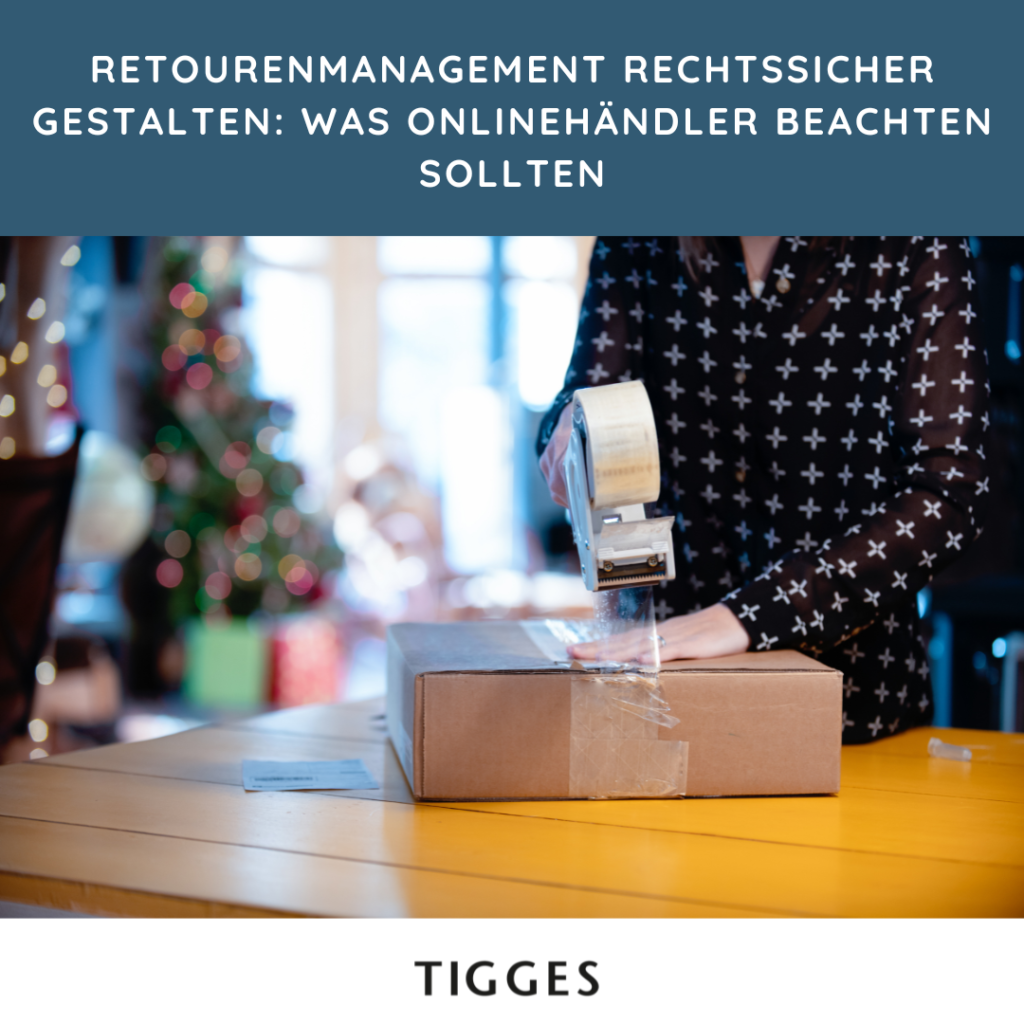
Christmas is peak season in online retail – and also the time for returns. Small and medium-sized enterprises (SMEs) in particular face the challenge of establishing effective and legally compliant returns management. According to a recent Handelsblatt article, more goods ordered online are returned in Germany than in any other European country. In the fashion sector in particular, up to 53% of items are returned, causing annual costs in the billions in this sector alone.
However, returns management is not only an economic challenge, but also a legal one. It includes measures to avoid or reduce returns without violating applicable law. This article shows which legal aspects online retailers should consider and provides practical tips for legally compliant returns management.
What is returns management?
Returns management refers to measures to avoid returns before and after the customer places an order. A distinction is made here:
- Avoiding returns: Measures that encourage customers not to return an order in the first place.
- Preventing returns: Strategies that make the returns process more difficult in order to reduce the number of returns.
Both approaches are legally sensitive and require careful consideration.
I. Legal aspects of avoiding returns
The aim of avoiding returns is to improve the basis for customers’ decisions so that they are less likely to return goods in the first place. The most important measures are
1. presentation of goods
- Advantage: High-quality and complete item descriptions, images or videos make it easier for customers to make a purchase decision and reduce uncertainties that can lead to returns.
- Legal requirements: Item descriptions must be correct and complete in order to comply with competition and consumer protection laws. Incorrect information can result in warnings or fines. Product safety law also requires extensive information obligations.
2. product reviews
- Advantage: Authentic reviews create trust and offer customers additional guidance, which reduces bad purchases and returns.
- Legal requirements: Misleading or manipulated ratings are not permitted and can have legal consequences such as injunctions or warnings.
3. money-back guarantees
- Advantage: Such guarantees reduce the perceived purchase risk and increase satisfaction without necessarily increasing the return rate.
- Legal requirements: The warranty conditions must not contain any self-evident terms and must go beyond the statutory warranty claims in order not to be misleading.
4. big data and individualization
- Advantage: With the help of data analyses, frequent returners can be identified and order processes can be individually adapted, which can reduce the returns rate.
- Legal requirements: The use of scoring models or data analyses must comply with data protection regulations. The requirements of the GDPR, the AGG and the BGB with regard to transparency and non-discrimination apply.
II Legal aspects of the prevention of returns
The prevention of returns aims to make the returns process less attractive or convenient. Particular caution is required here, as drastic measures can quickly become legally inadmissible.
1. compensation
- Advantage: Bonus points, discounts or cost refunds for not returning goods offer customers an alternative motivation and can make more economic sense than bearing the costs of a return.
- Legal requirements: Such measures are generally unproblematic as long as they are communicated clearly and transparently.
2. harassment costs
- Advantage: Increasing the effort or cost of a return, e.g. through complicated processes, can deter customers from returning goods and thus reduce the returns rate.
- Legal requirements: The measures must not restrict the legal rights of consumers. In particular, the provisions of distance selling law and e-commerce law in the German Civil Code (BGB) must be complied with. Unfair obstructions are not permitted.
Conclusion: Combining economic efficiency and legal certainty
Well thought-out returns management not only helps companies to reduce costs, but also strengthens customer loyalty. However, many measures are legally risky, especially in e-commerce. Online retailers should therefore ensure that their returns management complies with the applicable laws.
Our law firm supports SMEs in the legal structuring of their returns management and offers practical solutions for the challenges of online retail. Contact us if you have any questions on this topic!
The author and your usual contacts will be happy to answer any questions you may have!

Patrick J. Kaatz
kaatz@tigges.legal
+49 211 8687 165